
Reimagining Shelter: Norway’s Creative Use of Oil Drums to Fight Homelessness
Written by Lional Ronaldo
Source: https://ifeg.info/2026/01/10/93515/
In the bustling streets of Norway, one of the world’s most innovative and compassionate solutions to homelessness is taking form. A place where discarded oil drums once symbolized waste, now stand as sleek, insulated shelters providing warmth and protection to those who need it the most. This unexpected yet powerful initiative, driven by creativity and community spirit, has brought about a groundbreaking way to fight homelessness in urban spaces. But it’s not just about providing a roof over someone’s head; it’s about reimagining what can be done with materials that are often overlooked, turning them into something both practical and beautiful.
The idea, born from a collaboration between students, urban designers, and local communities, seeks to address one of the most pressing social issues in a novel way. Rather than focusing on expensive infrastructure projects or building brand new shelters, the project transforms industrial waste — old oil drums — into warm, safe, and secure shelters for those who have nowhere else to go.
Norway’s initiative stands as a testament to what can be achieved when creativity meets compassion. In this blog, we will explore how the concept came into existence, the design principles behind the shelters, and the impact this project has had on the community and the homeless individuals it serves.
The Concept: Transforming Waste into Warmth
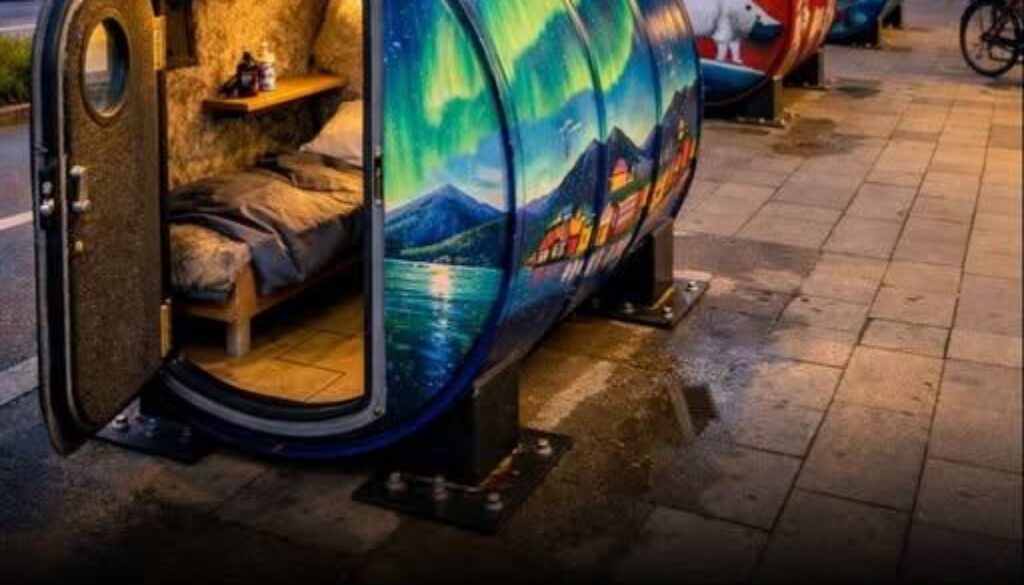
At the heart of the initiative lies a simple but powerful idea: turning discarded oil drums into emergency shelters. Oil drums, often seen as symbols of industrial waste, are now being reimagined as functional living spaces. These drums, once used to store hazardous materials, are cleaned, reinforced, and lined with wool to ensure that they provide warmth during the cold Norwegian winters.
The design of these shelters is both practical and environmentally conscious. The wool insulation helps trap heat, creating a comfortable and safe environment inside, no matter how cold it gets outside. By using local material like wool, the project not only reduces the carbon footprint but also supports local farmers, making the initiative more sustainable.
The use of recycled materials is a brilliant response to the growing problem of waste management, proving that solutions to complex social issues like homelessness don’t always need to come from new resources. Sometimes, it’s about using what we already have in a new and innovative way.
How the Shelters Work: Functionality Meets Social Impact
Each oil drum shelter is carefully designed to ensure it serves its purpose effectively. The barrels are securely bolted to the sidewalk, ensuring they cannot be moved or tampered with. The small shelters are equipped with a door that swings open sideways, and it locks from the inside, offering both privacy and safety. Inside, the oil drums are lined with thick wool insulation, which keeps the warmth in and the cold out, making them perfect for the harsh winter months in Norway.
Art and Emotion: Bringing Life to the Shelters
One of the most striking aspects of the project is the artwork that decorates each shelter. Students from local schools and universities were invited to paint the oil drums, and their creativity has turned each shelter into a unique, vibrant work of art. These murals, created by the hands of young people, transform the shelters from simple structures into symbols of hope, resilience, and community spirit.
The murals are not just decorative; they add meaning to the shelters, making them more than just places to sleep. They represent the work and dedication of the local community, particularly the students who painted them. Many of these students have never been involved in a project like this before, and for them, the experience has been deeply meaningful. They understand that their artwork is not just for beauty but is actively contributing to the well-being of those in need.
The sheltered space is compact but functional, with enough room for one person to sleep comfortably. The design focuses on providing just the essentials — a safe space to sleep and a feeling of security. Each shelter includes a small table and a chair, offering a small but much-needed space to store personal belongings, eat, or rest. This thoughtful design ensures that individuals can find respite in a safe, warm, and private space.
But while the shelters are undoubtedly functional, they are far from ordinary. The design takes into account the aesthetic appeal as well, ensuring that these shelters blend seamlessly into the city’s landscape. They are not just emergency shelters — they are vibrant, colorful pieces of art, thanks to the murals painted by local students. Some of the murals depict natural landscapes, while others feature abstract designs, and still, others incorporate elements of Norwegian culture. What all of them share is a sense of life and warmth — something that homeless shelters often lack. These murals, combined with the insulation inside the barrels, make each shelter not just a place to stay, but a place to feel human again.
Security and Privacy: A Place to Call Your Own
While these shelters are designed to be temporary, they also provide a sense of privacy and security for individuals who may have never had a space of their own. In a world where homelessness often leaves people vulnerable to violence, theft, and the elements, the oil drum shelters offer a level of safety that is not commonly found in more traditional shelters.
The design of the shelter ensures that it provides a secure environment where individuals can rest without fear of intrusion. The lockable door ensures privacy, while the robust structure prevents tampering or movement. These small but powerful features contribute to the emotional well-being of those using the shelters, providing not only physical protection but a sense of dignity and security.
Moreover, the shelters are situated in designated areas of the city, ensuring that the individuals using them are not isolated but are part of the community. This helps to break down the stigma associated with homelessness, allowing people to remain connected with the urban environment rather than being pushed to the outskirts of society.
Community Involvement and Empowerment: Students Making a Difference
The oil drum shelter project is not just about providing a roof for the homeless; it’s also about fostering a sense of community involvement. Students and young people from across Norway have played a central role in this initiative, not only through painting the shelters but also through their active engagement with the homeless community.
By involving students in the process, the project has helped to build a connection between the younger generation and the homeless population, breaking down barriers and encouraging empathy. The act of creating these shelters becomes a way for students to engage with their communities and make a tangible difference in the lives of others.
The involvement of young people also emphasizes the importance of civic responsibility and community-driven solutions. It shows that anyone — no matter their age or background — can contribute to solving some of the world’s most pressing issues. For the students, this project has been an eye-opening experience, showing them the power of creative thinking and social engagement in making real, positive changes.
A Sustainable Solution: Reducing Waste and Supporting Local Communities
Another key benefit of this project is its environmental impact. By repurposing discarded oil drums, the initiative directly addresses the problem of industrial waste. Instead of allowing these barrels to fill landfills, they are given new life as shelters, helping to reduce waste and promote sustainability. The use of local wool for insulation further reduces the environmental footprint of the project, as it supports local farmers and avoids the carbon cost associated with importing materials from outside the region.
This approach to sustainability extends beyond the environmental aspect. By repurposing waste materials, the project demonstrates that even discarded resources can be transformed into something valuable. It challenges our traditional ideas of waste and encourages us to think more creatively about how we use resources. Additionally, the initiative supports local communities by providing jobs and economic opportunities for those involved in the project, from the farmers supplying the wool to the artists painting the shelters.
The Future of the Project: Scaling and Expanding
Given the success of the initial project, there is growing interest in expanding the initiative to other cities in Norway and beyond. The oil drum shelters have proven to be an effective, affordable, and sustainable solution to homelessness, and many cities facing similar challenges are looking at this project as a model.
While the shelters are currently intended for short-term use, there is potential for them to be used as part of a broader strategy for addressing homelessness, perhaps alongside more permanent housing options. The project also has the potential to spark further innovation in how we think about shelter and urban design, encouraging other communities to look for creative solutions to their own social issues.
As the initiative grows, there is also the opportunity to involve more people in the process. Local communities, artists, and even businesses can contribute to expanding the project and making it even more impactful. This type of grassroots engagement is key to the success of the project and ensures that it remains a community-driven solution.
Conclusion: A Beacon of Hope and Compassion
Norway’s oil drum shelters are more than just a practical solution to homelessness; they represent a shift in how we approach societal issues. The project shows that creativity and compassion can collide in order to produce solutions that are not only functional but beautiful and meaningful. By repurposing waste, involving young people, and providing a safe, warm place for the homeless, Norway has created something that is both socially and environmentally beneficial.
In a world that often focuses on the negative aspects of homelessness, this initiative offers a ray of hope. It reminds us that with a little creativity, empathy, and community involvement, we can make a real difference in the lives of those who need it most. It teaches us that solutions don’t always have to be grand or expensive — sometimes, they can be found in the most unexpected places.
These shelters are a testament to the power of rethinking the world around us, showing us that when we change our perspective, we can solve problems in ways we never thought possible. The oil drum shelters are not just about providing warmth and shelter; they are about providing dignity, community, and hope for the future.