
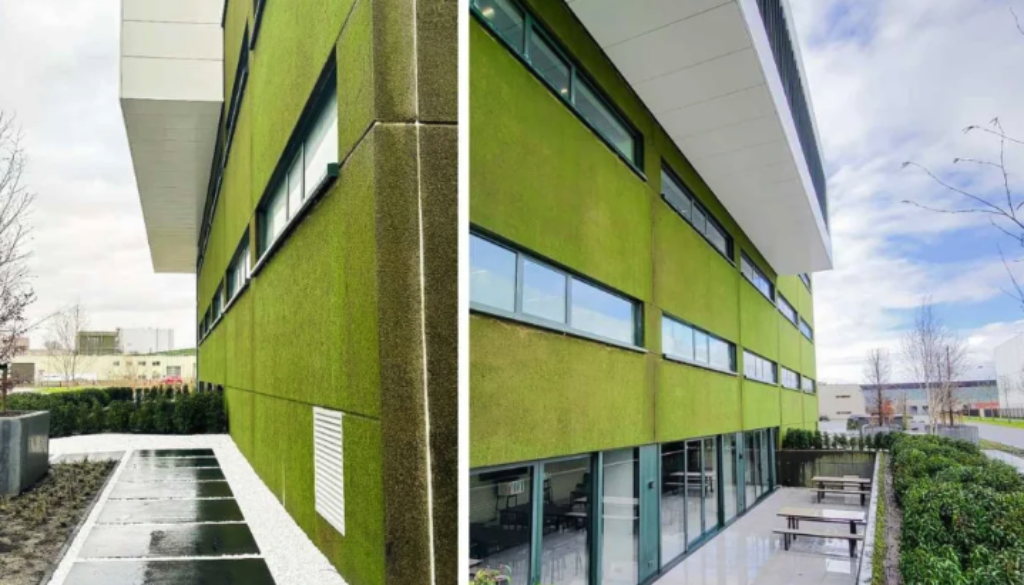
Dutch Engineers Made “Living Bricks” That Purify Air And Cool Buildings Like Living Walls!
Source: https://trendingamerican.com/dutch-engineers-living-bricks-purify-air-cool-buildings/
A few years ago, a chance conversation between two Dutch researchers sparked an idea that might one day change the way our cities look—and breathe. It started when Auke Bleij, a researcher studying urban heat islands, was introduced to Mark de Kruijff, who had been exploring bioreceptive concrete technology. One had a theory; the other had a prototype. Together, they built Respyre—a startup with a simple but bold mission: to turn ordinary concrete walls into self-sustaining, moss-covered ecosystems.
Their idea sounds like science fiction: take old, recycled concrete waste, mix it with a porous, breathable formula, and apply it to existing walls. Then, spray on a special moss-growing gel, and in just 12 weeks, buildings start to sprout green fuzz. But this moss isn’t just for looks. It actually helps purify the air, cool down buildings, and create miniature habitats for insects—all without damaging the structures underneath.
So, how does this work exactly? It starts with Respyre’s special type of “bioreceptive” concrete. Unlike the smooth, flat concrete we usually see, this version is rough, porous, and made from 70% recycled material. That texture and chemistry help it hold water and give moss something to latch onto. Since moss doesn’t have roots—just tiny hairs called rhizoids—it doesn’t dig into or damage the wall surface like ivy or vines might. It simply clings to the surface and starts growing outward.
The real secret is the moss gel. This gel contains moss spores and nutrients, and when sprayed onto the concrete, it helps the moss spread evenly and quickly. Unlike planting greenery in soil or containers, this method doesn’t need planting beds or complex irrigation systems. After the first few weeks of light watering, the moss becomes self-sustaining—surviving on rainwater and air moisture. It can handle heat, cold, wind, and even droughts with little or no maintenance.
Once the moss matures, the transformation begins. City walls, wind turbine bases, and social housing units in places like Amsterdam and Eindhoven are already testing the technology. These green facades don’t just look different—they feel different. While plain concrete walls can heat up to 60°C in the summer sun, moss-covered walls stay closer to 30°C. This natural cooling effect reduces the need for air conditioning and lowers energy costs.
But the benefits go beyond temperature. Moss is extremely effective at absorbing air pollution. It can take in fine particulate matter, carbon dioxide (CO₂), and nitrogen oxides (NOx), turning them into cleaner air and oxygen. It also acts as insulation, reducing heat transfer through walls and keeping buildings more comfortable inside. Plus, since the facades soak up water like a sponge, they help reduce rainwater runoff—preventing puddles, flooding, and other city water issues.
From an ecological point of view, moss adds value in other ways too. It creates small micro-habitats for insects, which support urban biodiversity. Studies suggest moss walls can absorb up to 1.2 kilograms of CO₂ per square meter each year. And while the numbers may vary depending on location and wall size, over decades, these facades could quietly remove tons of carbon from the atmosphere.
Unlike other vertical gardens, which can cost €500 per square meter and require pruning, containers, and heavy maintenance, Respyre’s solution is affordable and low-effort. From one square meter of moss starter material, they can grow up to 80 square meters of wall coverage. That kind of scale means cities don’t have to wait for parks or green roofs to grow—they can just green their walls.
Looking ahead, Respyre isn’t stopping with just walls. They’re developing three main product types: a sprayable moss mix for existing walls, a grout-like application for smoother surfaces, and pre-made moss panels for construction projects. The team is also experimenting with adding other species—like lichens and algae—to create more complex, living surfaces. Some even envision smart facades with embedded sensors to track air quality and growth in real time.
At a time when many cities are struggling with pollution, rising temperatures, and lack of green space, Respyre’s moss-covered concrete offers a surprising solution. It doesn’t need soil, sunshine, or space. It grows quietly in the background, cleaning the air, cooling the streets, and turning grey walls into living surfaces.
And it all started with a simple question: what if moss could do more than just grow in the cracks—it could help cities breathe again?